Specialist & High Level Cleaning in Bristol
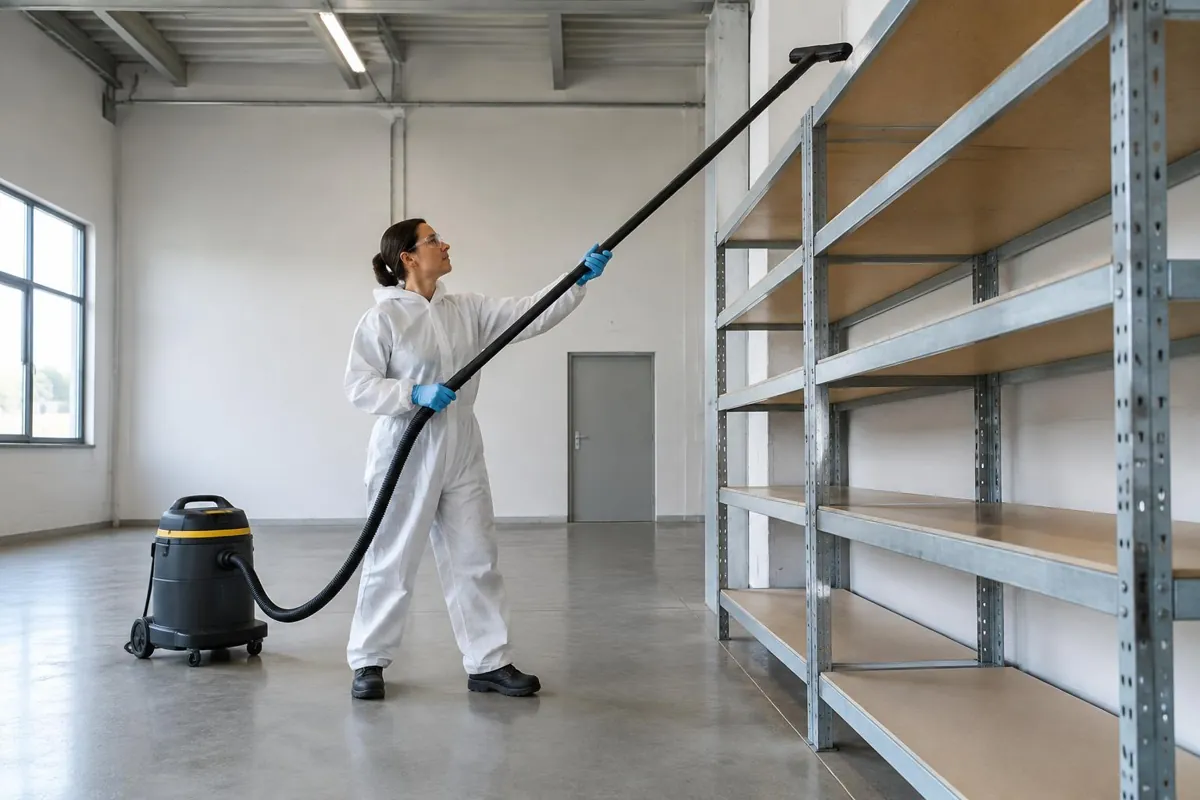
We provide specialist and high level cleaning for various sized businesses across Bristol. We plan around your site and access arrangements, covering elevated surfaces to difficult-to-reach areas.
Our Specialist Cleaning Service
- Starting point
- Hazard and access assessment before commitment
- Height
- No automatic roof, platform or high-rise provision
- Contamination
- Specialist competence must be established
- Waste
- Classification and lawful arrangements defined
- Sensitive spaces
- Site authorisation and technical controls required
- Outcome
- Written limits rather than universal removal promises
What does high level cleaning in Bristol involve?
High level cleaning in Bristol may concern overhead ledges, accessible beams, ceiling features and elevated internal surfaces. The assessment should identify the deposit, working height and what sits underneath. A ceiling cleaning service must distinguish decorative finishes from detectors, lighting, ventilation and fragile panels that cleaning personnel must not disturb without specific authorisation.
A dusty warehouse beam and an occupied reception ceiling present different access and contamination risks. The enquiry itself does not establish that platforms, rope access or work above active production are available.
Typical tasks
- Identify elevated surfaces and deposit type
- Map sensitive items directly below
- Separate fixtures from building finishes
- Record unreachable or fragile components
Free site survey
Discuss assessment requirements
Explain the setting, known hazards and responsible site contact so the next assessment or specialist referral can be considered without assuming capability.
- Written specification before any price
- Bristol and South Gloucestershire
How should access and occupation be controlled?
Clearance around racking, machinery or stairs may prevent apparently simple overhead work. If the assessment identifies conditions outside the proposed team’s competence or equipment, work should be deferred while appropriate specialist arrangements are established.
- Agree barriers and alternative routes
- Identify machinery shutdown responsibilities
- Check floor condition and equipment space
- Set stop-work and escalation contacts
Initial triage
Review information without disturbing hazards
Best forDecide whether specialist assessment is required
Controlled shutdown
Assessed overhead or sensitive work
Best forObtain site and technical permissions
Separate specialist attendance
Hazardous or uncertain situations
Best forOnly after competence and controls are established
Compare in a table
| Window or zone | Focus | Planning point |
|---|---|---|
| Initial triage | Review information without disturbing hazards | Decide whether specialist assessment is required |
| Controlled shutdown | Assessed overhead or sensitive work | Obtain site and technical permissions |
| Separate specialist attendance | Hazardous or uncertain situations | Only after competence and controls are established |
How are sensitive materials and server rooms treated differently?
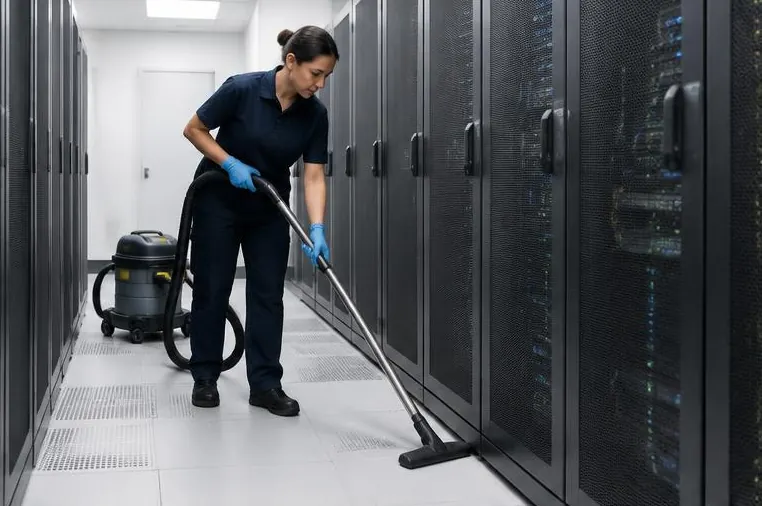
A data center cleaning service or interior server cleaning service enquiry must be assessed by competent specialists with the site’s technical authority involved. General dust removal is not permission to open hardware, touch cables or clean live equipment. Server-room arrangements must address electrical risks, electrostatic sensitivity, airflow and the consequences of accidental interruption.
Distinguish cleaning an authorised clear floor area from working inside racks or equipment. No specialist electronic-cleaning capability is implied until competence, access and the precise task have been independently established.
- Obtain technical-owner approval
- Define prohibited equipment contact
- Agree permitted methods and materials
- Keep IT servicing outside general cleaning
How are trauma, sharps, hoarding and mould enquiries handled?
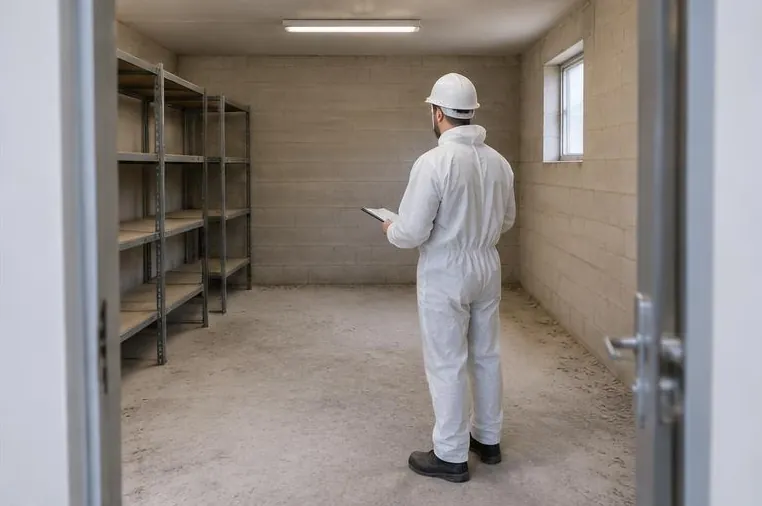
Trauma cleaning, crime scene cleaner enquiries, sharps disposal and suspected biohazards require competent assessment and appropriate specialist arrangements before any work is offered. Hoarder cleaning and mould cleaning need the same deliberate screening. These descriptions identify situations needing referral or further assessment, and routine cleaners are not qualified to handle hazardous contamination.
Obtain release from relevant authorities before considering a scene-related enquiry. Define the competent assessor, waste route, protective controls and any separate remediation team before deciding whether a cleaning scope is appropriate.
Do not handle unidentified sharps or residues
Check authority release and property permissions
Assess structural, welfare and moisture concerns
Arrange suitable specialist waste handling
What information is needed before a specialist quotation?
A meaningful quotation depends on a clear description of the hazard, access, affected materials and desired endpoint. Photographs can support initial triage but cannot prove that an area is safe. Specialist cleaning should not be priced or scheduled as routine work where contamination, fragile surfaces or electrical risks have not been competently assessed.
Your quotation
A fixed price after a free survey
- Site control and access permissions
- Known hazards and existing assessment reports
- Affected surfaces and contamination boundaries
- Required records and excluded technical tasks
How do we arrange specialist cleaning?
A specialist enquiry follows a screening route rather than an automatic booking. Start with the known hazard and site authority, then establish who is competent to assess it. Only an appropriate assessment can define a safe scope. Access, specialist responsibilities and evidence requirements must be agreed before any decision about delivery or referral.
- 1
Describe the situation
Provide a non-graphic account of hazards, location and affected materials.
- 2
Identify the decision-maker
Establish property permissions and relevant technical or authority contacts.
- 3
Arrange competent assessment
Resolve contamination, access and sensitive-equipment questions before commitment.
- 4
Allocate specialist responsibilities
Define suitable personnel, waste routes and any external technical support.
- 5
Agree boundaries and records
Record exclusions, handback criteria and actions outside cleaning.
Specialist Cleaning questions
Straight answers to the questions we hear most often. If yours is not here, ask us during your free survey.
What should I do if I discover a discarded needle?
Keep people away and do not pick it up, recap it or place it in an ordinary bin. Sharps disposal in Bristol requires competent assessment and a suitable waste route; a routine cleaning visit should not be used to improvise removal of an unidentified hazardous item.
Can a trauma or crime scene be booked as an urgent deep clean?
No. Trauma and crime scene situations need competent assessment, appropriate specialist arrangements and any necessary release from authorities before work is considered. Keep access controlled and explain the situation without disturbing materials or sharing unnecessary personal information during the initial enquiry.
Is hoarder cleaning mainly a matter of removing belongings?
Not necessarily. Agree what can be retained or removed and who authorises decisions; clearance should not be promised simply from photographs or an estimated number of rooms.
Will wiping mould stop it returning?
Surface cleaning alone does not resolve a leak, condensation problem or concealed moisture source. Do not assume a cosmetic improvement establishes successful remediation or makes an affected room suitable for occupation.
Can cleaners open servers to remove dust?
Opening servers or working inside racks is not part of ordinary building cleaning. A server-room floor-cleaning request must not be interpreted as permission to unplug cables, touch controls or maintain electronic hardware.
Does high-level cleaning include moving ceiling tiles or detectors?
Not by default. A high-level surface-cleaning scope should name exclusions, protect the area below and stop if unexpected damage or unidentified materials are encountered during the assessed work.
Related services
Describe the risk before arranging attendance
Explain the setting, known hazards and responsible site contact so the next assessment or specialist referral can be considered without assuming capability.