Healthcare, Surgery & Dental Practice Cleaning in Bristol
We provide healthcare and surgery cleaning for various sized practices across Bristol. We plan around your patient hours and room requirements, covering reception areas to treatment rooms.
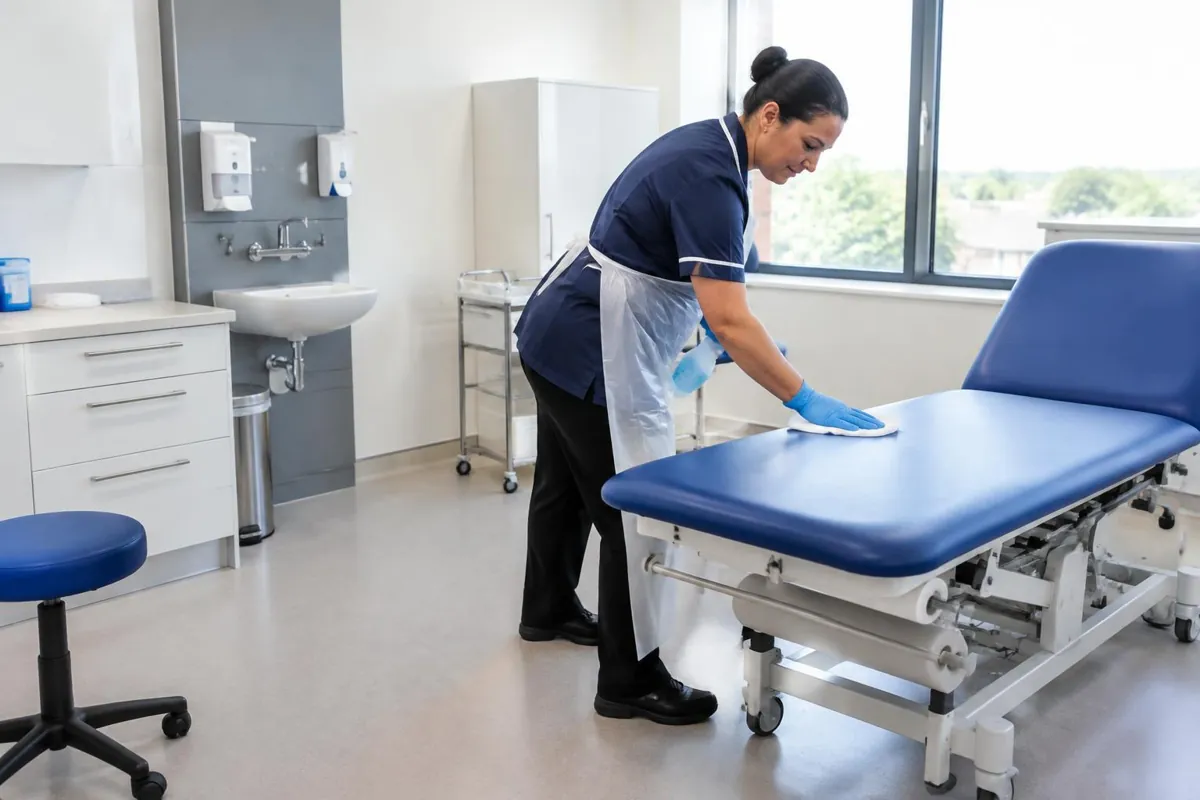
Our Healthcare & Surgery Cleaning Service
- Settings
- GP, dental, health-centre and veterinary premises enquiries
- Specification
- Room-level tasks agreed with the responsible practice lead
- Clinical boundary
- No instrument sterilisation within routine premises cleaning
- Waste boundary
- Clinical waste collection is not part of this scope
- Access
- Patient privacy and clinical room release agreed first
- Escalation
- Unexpected sharps or contamination reported before proceeding
What does healthcare cleaning in Bristol cover?
Healthcare cleaning in Bristol can include reception areas, waiting rooms, toilets, corridors and agreed clinical-room surfaces. The practice must define what cleaners may touch and what remains with clinical staff. Instrument processing, sterilisation and handling patient-care equipment are not automatically included in a premises cleaning specification.
Create a room inventory with the practice lead, identifying accessible furniture, frequently touched surfaces and specialist equipment that must remain untouched. Each inclusion needs a named responsibility rather than assumptions based on the room’s title.
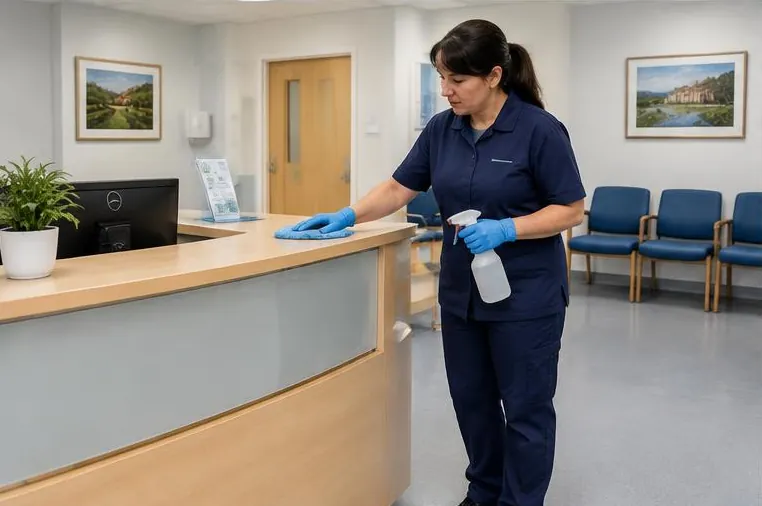
Typical tasks
- Clean agreed reception desks without handling records
- Attend patient toilets and accessible washbasins
- Clean released consultation-room surfaces as specified
- Maintain separate equipment for designated areas
- Record excluded clinical devices and restricted storage
Free site survey
Discuss your practice requirements
Bring your room list and cleaning protocol to a discussion about access, responsibilities and a suitable premises specification.
- Written specification before any price
- Bristol and South Gloucestershire
When can surgeries and treatment rooms be released for cleaning?
A published closing time may not reflect the end of consultations or administrative work. Where patients remain nearby, plan chemical handling and equipment movement around privacy, safe routes and the practice’s infection-prevention arrangements rather than creating unplanned shared workspaces.
- Check actual clinic finishing times
- Define a room-release contact and escalation route
- Keep patient routes clear during phased work
Before appointments
Released reception and circulation areas
Best forComplete drying before patients arrive
After clinics
Agreed rooms and patient facilities
Best forPractice confirms clinical items are secured
Planned closure
Periodic detail and accessible floor work
Best forCoordinate maintenance and clinical restart
Compare in a table
| Window or zone | Focus | Planning point |
|---|---|---|
| Before appointments | Released reception and circulation areas | Complete drying before patients arrive |
| After clinics | Agreed rooms and patient facilities | Practice confirms clinical items are secured |
| Planned closure | Periodic detail and accessible floor work | Coordinate maintenance and clinical restart |
How does cleaning align with infection-prevention procedures?
The practice’s infection-prevention lead should approve methods, products, frequencies and any monitoring requirements. Cleaning removes soiling; disinfection is a separate controlled step when required by the protocol. Product compatibility, dilution and contact time matter, and no premises cleaning service alone establishes regulatory compliance or proves that a clinical environment is sterile.
NHS England’s national standards of healthcare cleanliness provide a reference for allocating responsibilities and assessing cleaning in relevant healthcare settings. Translate that decision into a practical room schedule, with agreed records and checks, rather than claiming that a generic cleaning visit delivers NHS approval or CQC compliance.
- Obtain the practice’s approved product and method requirements
- Specify cleaning records and room-level checks
- Separate equipment according to the agreed risk assessment
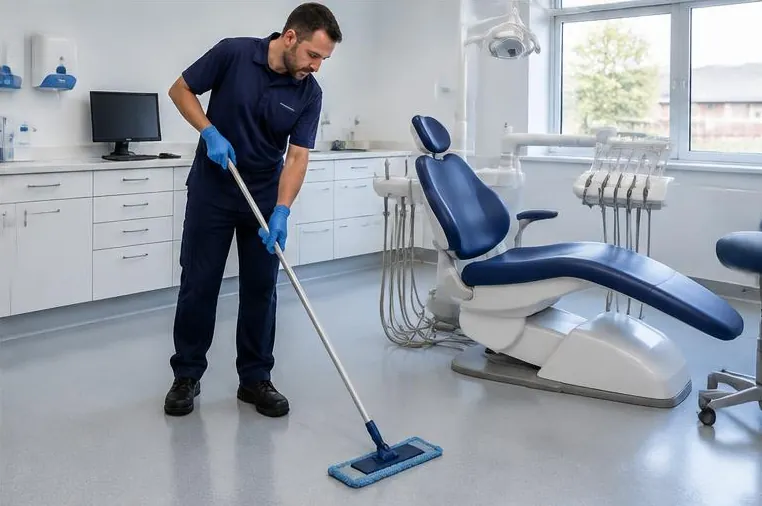
What happens if a cleaner finds sharps or clinical contamination?
Unexpected sharps, body fluids or unsegregated clinical waste require the agreed escalation procedure, not routine handling. The cleaner should avoid disturbing the hazard and notify the designated practice contact. Any specialist response needs its own assessment and authorisation; clinical waste collection and instrument decontamination remain outside ordinary premises cleaning.
The practice should explain how it makes rooms safe before release and who responds if that has not happened. Record stop-work conditions so an uncertain situation does not become an improvised cleaning task.
Do not pick up loose sharps as ordinary litter
Identify the practice contact for unsafe room conditions
Keep clinical waste routes distinct from general rubbish
What determines a healthcare premises cleaning quotation?
Room risk, consultation patterns, washroom use and the required checking arrangements shape the scope alongside floor area. A small practice with several treatment rooms can need more detailed planning than a larger administrative suite. Agree clinical exclusions, approved products and recording duties before comparing proposals or deciding visit lengths.
Your quotation
A fixed price after a free survey
- List rooms and their permitted cleaning tasks
- Identify product supply and storage arrangements
- Separate clinical staff routines from contracted visits
How do we arrange healthcare & surgery cleaning?
A healthcare cleaning plan needs clinical input before tasks are assigned. Start with room use and the practice’s procedures, then agree access, methods and exclusions with the responsible lead. Document how rooms are released and checked, including what happens when a hazard prevents work or a clinic finishes later than expected.
- 1
Meet the practice lead
Identify the person responsible for cleaning policy and infection-prevention decisions.
- 2
Classify the spaces
List patient areas, staff facilities, clinical rooms and restricted equipment.
- 3
Agree approved methods
Record products, equipment separation, contact times and monitoring requirements.
- 4
Set release arrangements
Define privacy controls, access permissions and responses to unsafe rooms.
- 5
Review the records
Use agreed checks to discuss omissions and changes to clinical activity.
Healthcare & Surgery Cleaning questions
Straight answers to the questions we hear most often. If yours is not here, ask us during your free survey.
Does surgery cleaning include sterilising dental instruments?
No. Routine premises cleaning should not be understood as instrument decontamination, sterilisation or validation of clinical equipment. Agree the boundary with the dental lead before any work in a treatment or decontamination room.
Can cleaning take place between patient appointments?
Only where the practice has defined a suitable task, released the room and allowed enough time for the approved method. If appointments overrun, the agreed contact should decide whether the task moves to a later visit.
Is clinical waste collection included with the cleaning visit?
Clinical waste collection is outside this premises cleaning scope. The practice should retain its authorised arrangements for segregation, storage and collection, and identify what cleaners may do with ordinary waste. Unclear or incorrectly segregated material should be reported through the agreed practice procedure.
How should a veterinary clinic be scoped differently?
Start with the species treated, animal holding areas and the clinic’s own infection-control instructions. Cleaning does not include animal handling, clinical equipment processing or specialist waste removal by default.
Will cleaning make a practice CQC compliant?
A cleaning contract cannot establish CQC compliance on its own. The practice remains responsible for deciding applicable requirements, clinical governance and evidence. Discuss the checks and documentation the practice needs without substituting a marketing promise for its own assessment.
What should happen when a treatment room is not ready?
Use the agreed release procedure rather than moving medicines, patient records or sharps to create access. Clear reporting matters more than completing a checklist through unsafe improvisation or crossing clinical responsibility boundaries.
Related services
Define your practice cleaning boundaries
Bring your room list and cleaning protocol to a discussion about access, responsibilities and a suitable premises specification.