Commercial Kitchen Cleaning in Bristol
We provide commercial kitchen cleaning for various sized businesses across Bristol. We plan around your service times and shutdown windows, covering equipment surrounds to preparation areas.
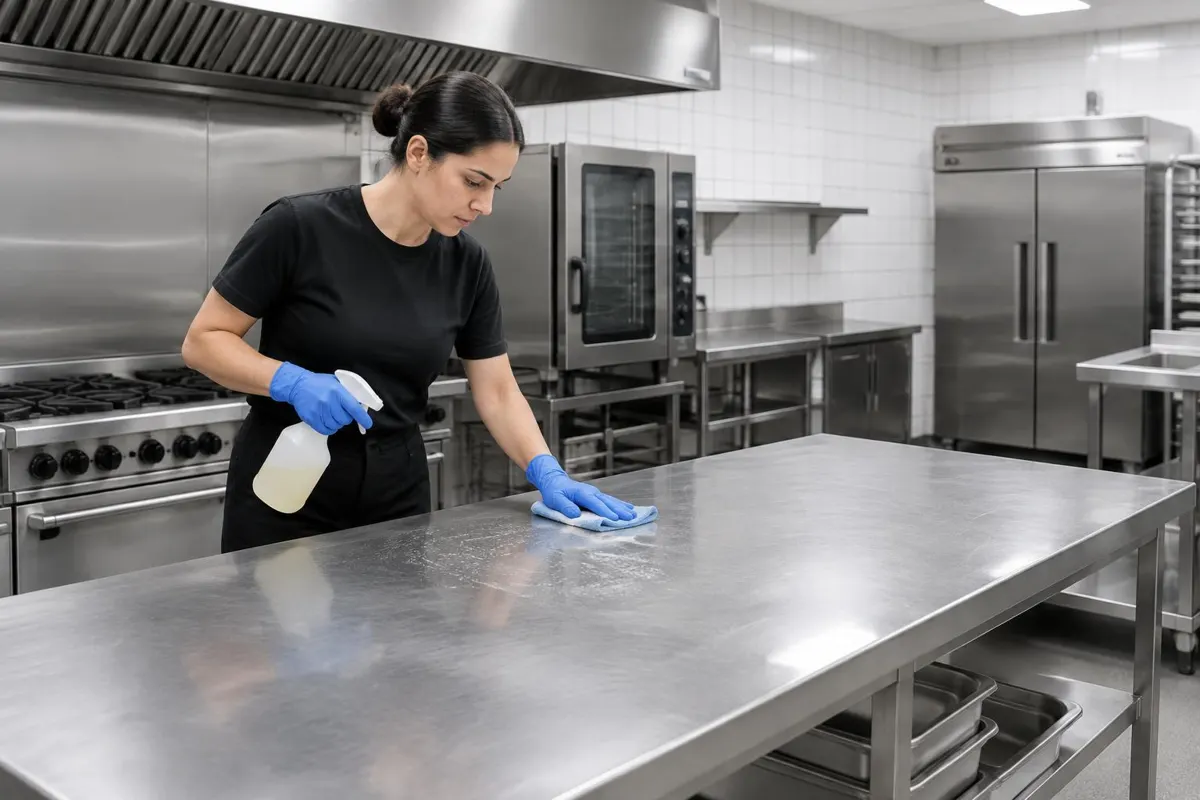
Our Commercial Kitchen Cleaning Service
- Service
- Kitchen deep cleaning and agreed degreasing
- Premises
- Catering kitchens in restaurants, hotels and workplaces
- Access
- Equipment cooled, isolated and food protected first
- Timing
- Closure window agreed with the kitchen manager
- Frequency
- One-off or periodic, based on kitchen conditions
What does commercial kitchen cleaning in Bristol include?
Commercial kitchen cleaning in Bristol begins with an equipment-by-equipment scope: preparation surfaces, accessible appliance exteriors, splashbacks, floors and agreed storage areas. Internal appliance cleaning depends on manufacturer instructions and safe access. Extract ductwork, electrical repairs and pest treatment are not implied by the phrase deep clean and require separate assessment.
A kitchen walk-through should identify stainless steel, aluminium, seals and sensitive controls before chemicals are selected. Ask the chef to show persistent grease traps and inaccessible corners. We record exclusions so there is no misunderstanding about moving connected appliances or opening panels.
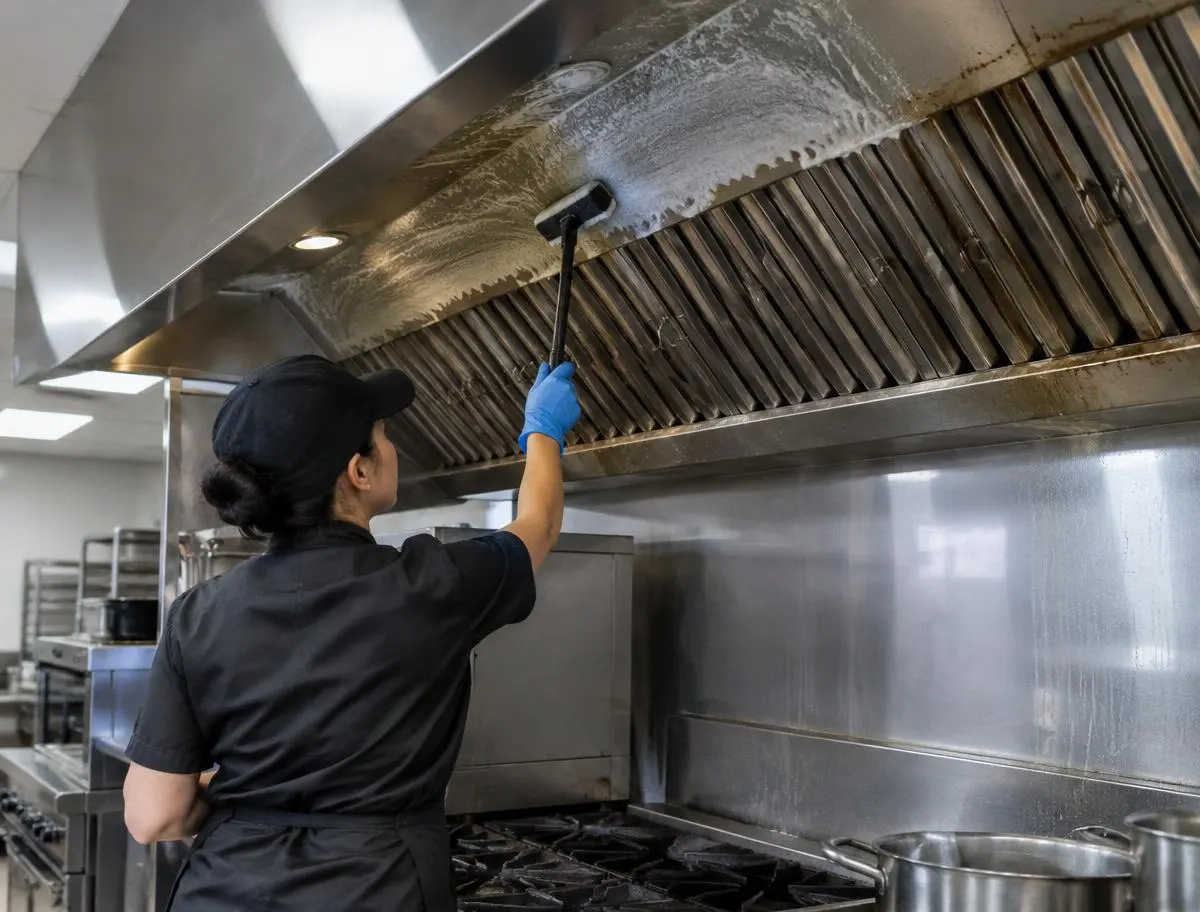
Typical tasks
- Degrease suitable workbench surfaces and accessible splashbacks
- Clean reachable wall finishes and floor-to-wall junctions
- Remove deposits from agreed appliance exteriors
- Wash accessible shelving after stock has been removed
- Clean sinks, taps and agreed waste receptacles
- Scrub compatible flooring and leave a dry handover route
Free site survey
Request a kitchen assessment
Send your equipment list and preferred closure window so we can discuss what can safely be included.
- Written specification before any price
- Bristol and South Gloucestershire
How should a catering kitchen prepare for a deep clean?
Do not disconnect gas or move hard-wired machinery simply to create access. Tell us which units a competent person can release and which must stay in position. We would also check water availability, drainage, chemical storage and the time the kitchen needs to be ready for food preparation.
During trading
Food-contact routines
Best forManaged within the operator’s food safety system
Planned shutdown
Grease and accessible equipment
Best forClear stock and allow cooling first
Specialist visit
Extract system inspection and cleaning
Best forSeparate access and documentation scope
Compare in a table
| Window or zone | Focus | Planning point |
|---|---|---|
| During trading | Food-contact routines | Managed within the operator’s food safety system |
| Planned shutdown | Grease and accessible equipment | Clear stock and allow cooling first |
| Specialist visit | Extract system inspection and cleaning | Separate access and documentation scope |
Which food safety guidance informs kitchen cleaning?
Kitchen cleaning should sit within the food business’s cleaning schedule, with appropriate products, frequencies and records rather than an isolated annual reset. Food Standards Agency guidance distinguishes cleaning from disinfection and stresses effective treatment of food areas. Follow product labels, including dilution and contact time, and keep cleaning chemicals separate from food supplies.
The operator retains responsibility for food safety. A contractor report cannot replace your checks between raw and ready-to-eat preparation or prove every hazard is controlled. If sanitising food-contact surfaces is included, agree the product and method against your existing procedures before the clean.
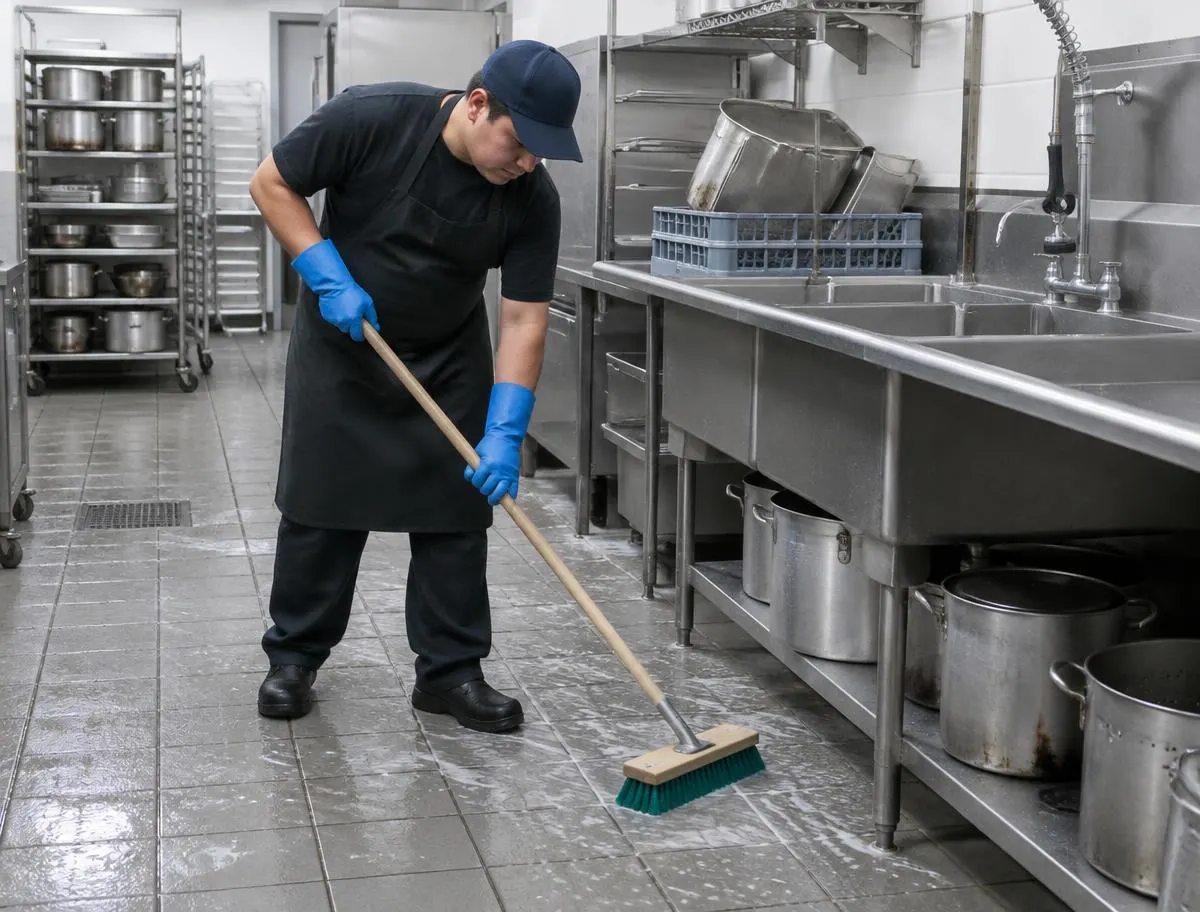
How often is kitchen degreasing needed?
Kitchen degreasing frequency depends on cooking methods, trading intensity, ventilation and how well daily cleaning controls deposits. A fryer-heavy takeaway will not have the same pattern as a lightly used office kitchenette. Set periodic work from observed conditions and your management checks, while keeping routine food-area cleaning active every operating day.
Inspect edges behind movable equipment and the underside of accessible tables, not only the surfaces visible from the doorway. Photographs taken with permission can help define the next scope. Extraction inspection and maintenance should follow their own requirements; a clean preparation bench says nothing about grease inside the duct.
What determines a commercial kitchen deep-clean quote?
A commercial kitchen deep-clean quotation should list the equipment and surfaces included, the access assumptions, the proposed working window and the handover checks. Size alone is insufficient: heavy deposits, obstructed appliances and fragile components change the work.
How do we arrange commercial kitchen cleaning?
Planning a kitchen clean starts with the chef’s equipment list and available shutdown time. The proposal then identifies preparation duties, methods and exclusions. On the agreed date, safe access is checked before work proceeds, and the kitchen manager reviews the cleaned areas before bringing equipment and food preparation back into use.
- 1
Survey the cookline
Record appliances, deposit levels and the surfaces requiring careful treatment.
- 2
Agree shutdown duties
Allocate food protection, cooling and competent isolation to the right people.
- 3
Check the method
Match products and equipment to materials and the venue’s hygiene procedures.
- 4
Complete the scoped clean
Work through accessible areas without opening unapproved equipment or services.
- 5
Inspect before restart
Review the task sheet and note any unresolved defects with the kitchen manager.
Commercial Kitchen Cleaning questions
Straight answers to the questions we hear most often. If yours is not here, ask us during your free survey.
Is kitchen deep cleaning the same as an extract clean?
A kitchen deep clean addresses agreed room surfaces and equipment; an extract clean addresses the canopy, filters and duct system specified for that job. They may be coordinated during one shutdown, but they are not interchangeable. Ask for separate scope details and confirm any required report or certificate before accepting a combined proposal.
Can you clean inside commercial fridges?
Fridge interiors can be assessed for inclusion once stock has been moved to suitable storage and the appliance is safely prepared. Seals, shelving and drainage need care consistent with the manufacturer’s guidance. Do not assume food relocation or refrigerant work is provided; those responsibilities should be settled with the kitchen manager first.
Will a kitchen clean guarantee a five-star hygiene rating?
No contractor can guarantee a hygiene rating from cleaning alone. Inspectors consider food handling, the condition of the premises and how food safety is managed. A thorough clean can support your routines, but management records, training and operational controls remain essential. Any promise of an automatic rating would be misleading.
Can cleaning happen while cooking continues?
A deep clean usually needs affected areas taken out of food preparation use. Chemicals, loosened grease and equipment movement should not overlap with exposed food or active cooking. A phased arrangement may be possible in a genuinely separate area, but the kitchen manager must assess separation, access and restart procedures beforehand.
Are connected cookers moved during cleaning?
Connected cookers are not moved simply because deposits are visible behind them. Gas, electrical and water connections create additional risks, and access may require a competent technician arranged by the operator. The quotation should distinguish cleaning around a fixed unit from work possible only after approved disconnection or repositioning.
Related services
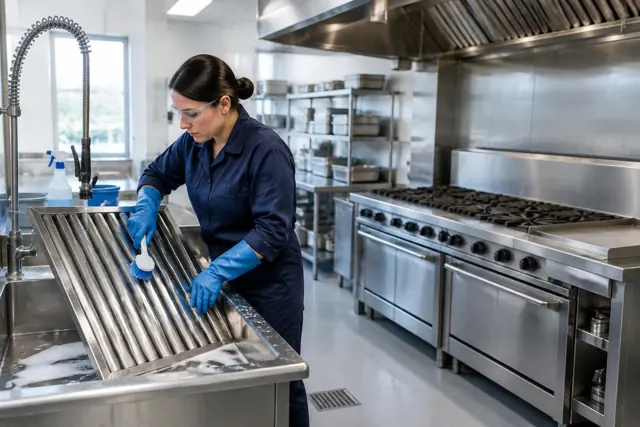
Plan a kitchen shutdown with a clear scope
Send your equipment list and preferred closure window so we can discuss what can safely be included.