Commercial Floor Cleaning in Bristol
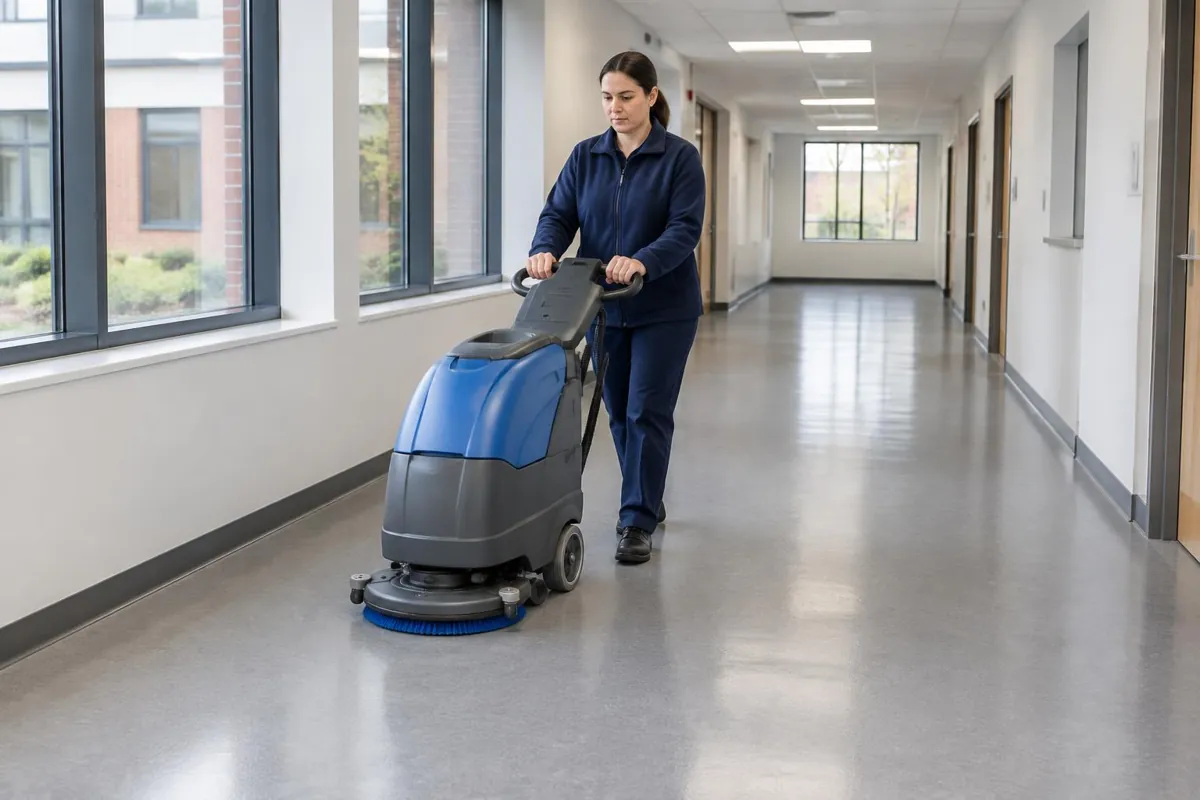
We provide commercial floor cleaning for various sized businesses across Bristol. We plan around your needs and trading hours, covering routine maintenance to machine scrubbing and refinishing.
Our Commercial Floor Cleaning Service
- Surfaces
- Vinyl, stone, tile and assessed industrial floors
- Methods
- Matched to material and existing finish
- Preparation
- Loose grit removed before wet treatment
- Access
- Work zones separated from building users
- Reopening
- Drying or curing checked before use
- Scope
- Maintenance and restoration listed separately
What does commercial floor cleaning in Bristol cover?
Commercial floor cleaning in Bristol can cover removal of loose grit, controlled machine scrubbing, edge detailing and recovery of dirty cleaning solution. The exact method depends on the material and its finish. Stripping, resealing or polishing should be specified separately, because not every floor benefits from these treatments or tolerates the same equipment.
A survey should distinguish vinyl sheet, luxury vinyl tile, linoleum, ceramic, natural stone and coated concrete rather than grouping them as hard floors. Heavy soiling near a loading door may need a different approach from a reception finish, even when both areas share the same building and maintenance schedule.
Typical tasks
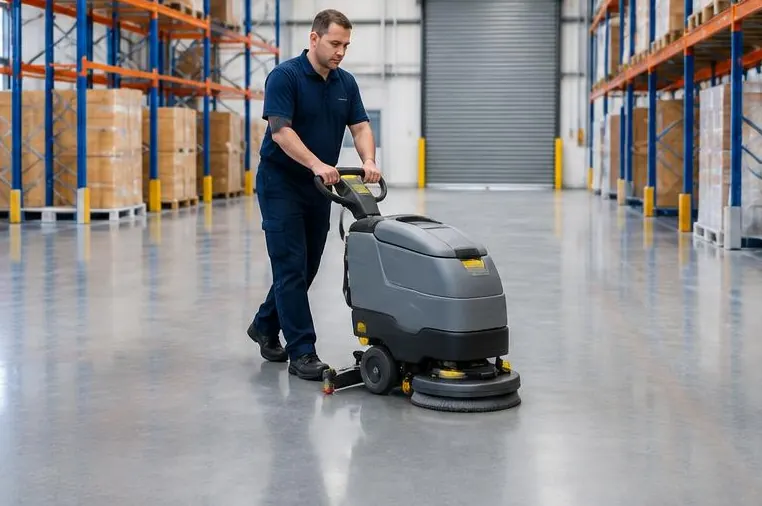
- Dry soil removal before scrubbing
- Compatible pads or brushes
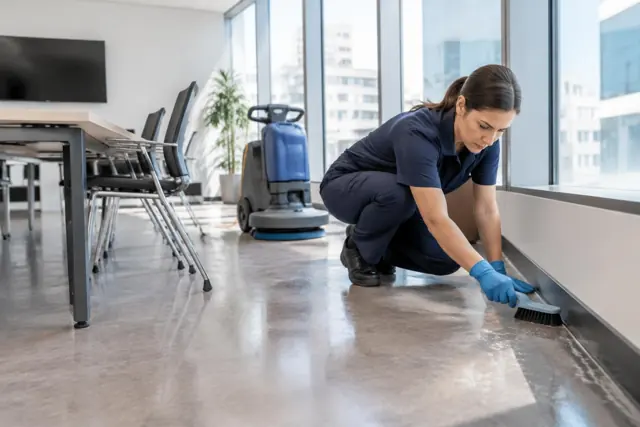
- Edges and accessible corners
- Recovery of used cleaning solution
- Optional finish treatment where suitable
Free site survey
Discuss your floor-care plan
Send the floor type, approximate area and available closure window to shape a material-specific cleaning brief.
- Written specification before any price
- Bristol and South Gloucestershire
How is cleaning scheduled around building use?
Walk the proposed route with the premises contact before work begins. Staff should know when each zone can reopen and whether a new coating needs additional curing time.
- Reserve clear access to exits
- Plan furniture movement in advance
- Keep users out of wet treatment zones
Routine maintenance
Grit and surface soil
Best forFit around regular occupation
Periodic treatment
Scrub and recover
Best forSegregate manageable zones
Finish renewal
Suitable stripping or recoating
Best forAllow product-specific curing
Compare in a table
| Window or zone | Focus | Planning point |
|---|---|---|
| Routine maintenance | Grit and surface soil | Fit around regular occupation |
| Periodic treatment | Scrub and recover | Segregate manageable zones |
| Finish renewal | Suitable stripping or recoating | Allow product-specific curing |
How are floor compatibility and drying assessed?
Identify the substrate, coating and manufacturer guidance before selecting chemicals, pads or water levels. Test uncertain treatments in a discreet area and check the result after drying. Moisture-sensitive joints, damaged seams and porous surfaces need particular care. A floor that looks dry may still need time before furniture, wheeled traffic or coatings are suitable.
Acidic products can damage calcareous stone, while excessive alkalinity or aggressive pads can harm some resilient finishes. Reopening depends on the method, conditions and product instructions, not a universal drying time supplied before the survey.
- Check sealers and previous coatings
- Inspect seams, cracks and loose tiles
- Respect chemical dilution and contact time
- Allow stated coating cure periods
Can polishing solve staining, wear or slippery areas?
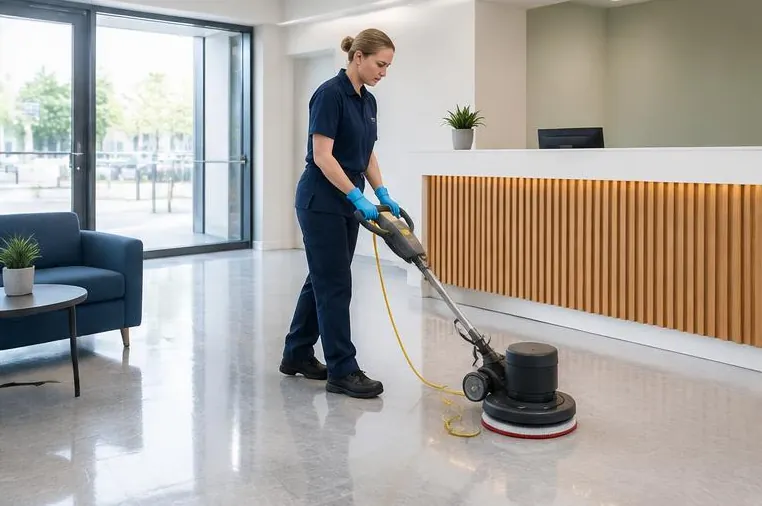
Polishing is not a universal remedy for staining, worn coatings or slip concerns. First establish whether the problem is removable soil, residue, physical damage or a failing finish. Some floors are designed for a matt appearance and should not receive a gloss coating. Persistent slipperiness requires investigation rather than simply adding another product.
Entrance contamination, unsuitable maintenance chemicals and excessive product residue can all affect how a floor behaves. Agree any stripping, diamond treatment or recoating only after checking suitability and the required operational finish.
Distinguish marks from worn material
Investigate grease and tracked-in moisture
Keep repairs separate from cleaning
Avoid unapproved gloss finishes
What affects a floor-cleaning quotation?
A floor-cleaning quotation depends on measured area, floor type, existing coatings, soil level and machine access. Furniture density, stairs, edges and the need for phased working also change the scope. Identify whether the request is for maintenance, a restorative clean or removal and replacement of a compatible finish before comparing proposals.
Your quotation
A fixed price after a free survey
- Measure each distinct floor finish
- Describe furniture and fixed obstacles
- List finish treatments separately
How do we arrange commercial floor cleaning?
A practical floor-care plan identifies materials first, then matches treatment to the problem and the building timetable. We review access, trial uncertain methods and agree the preparation required. The written scope should explain drying or curing restrictions, furniture responsibilities and the checks needed before the premises contact releases each area for normal use.
- 1
Identify the construction
Record substrate, finish, seams and visible wear.
- 2
Assess the soil
Separate loose grit, greasy deposits and permanent damage.
- 3
Choose compatible treatment
Review care guidance and test uncertain methods.
- 4
Plan controlled access
Agree furniture movement, barriers and drying conditions.
- 5
Review before reopening
Check the treated area against the specified method and restrictions.
Commercial Floor Cleaning questions
Straight answers to the questions we hear most often. If yours is not here, ask us during your free survey.
Can you strip and reseal every vinyl floor?
No. Any proposed finish renewal should follow a compatibility check, with separate time allowed for preparation, application and curing.
How long will the floor take to dry?
Drying depends on the treatment, water recovery, air movement, temperature and floor construction. A coating can also have a curing period beyond surface dryness. Avoid setting a reopening deadline until the chosen method and local conditions have been reviewed.
Can natural stone be cleaned with descaler?
Not as a general rule. Mineral build-up may need a specialist approach or a controlled test rather than the chemical normally used on a ceramic washroom tile.
Must desks and shelving be removed?
Not necessarily, but access limits should be explicit. Clear routes and lightweight movable items may make treatment more consistent, while fixed shelving and heavy furniture can restrict machine coverage. Electrical connections and loaded storage should not be disturbed without responsible authorisation.
Will machine cleaning remove scratches?
Ordinary machine cleaning removes compatible soil; it does not replace missing material or repair deep scratches. Cleaning does not make damaged flooring look new.
How often should a commercial floor receive deeper treatment?
Base the interval on footfall, contamination, entrance matting, maintenance results and the manufacturer’s care instructions. A loading area and a quiet meeting room rarely need the same programme. Adjusting daily grit removal may protect the finish better than repeatedly increasing aggressive treatment.
Related services
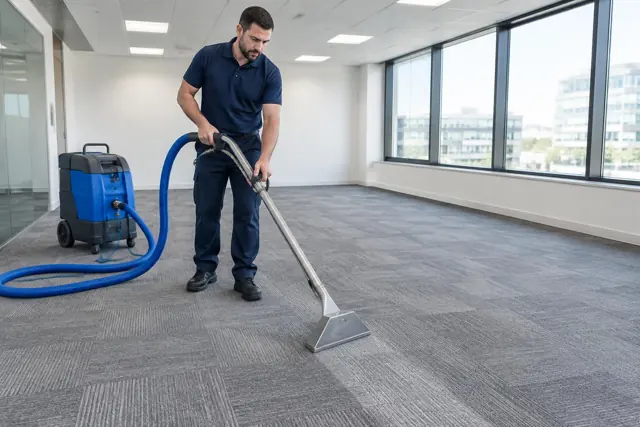

Choose a treatment that suits the floor
Send the floor type, approximate area and available closure window to shape a material-specific cleaning brief.