Commercial Deep Cleaning in Bristol
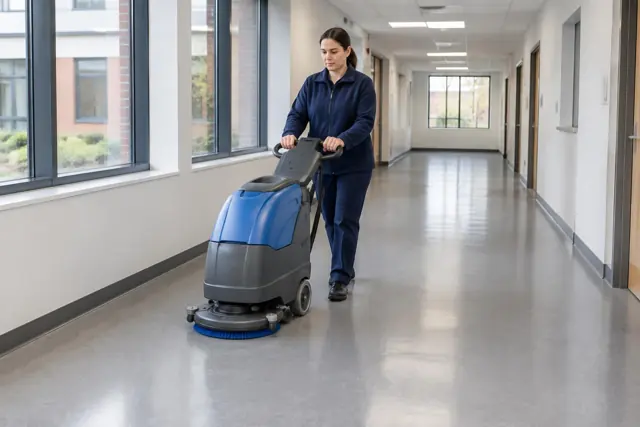
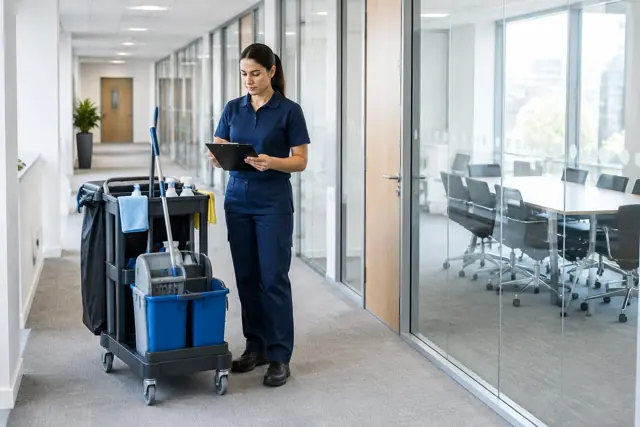
We provide commercial deep cleaning for various sized businesses across Bristol. We plan around your needs and operating hours, covering one-off intensive cleans to periodic detail work.
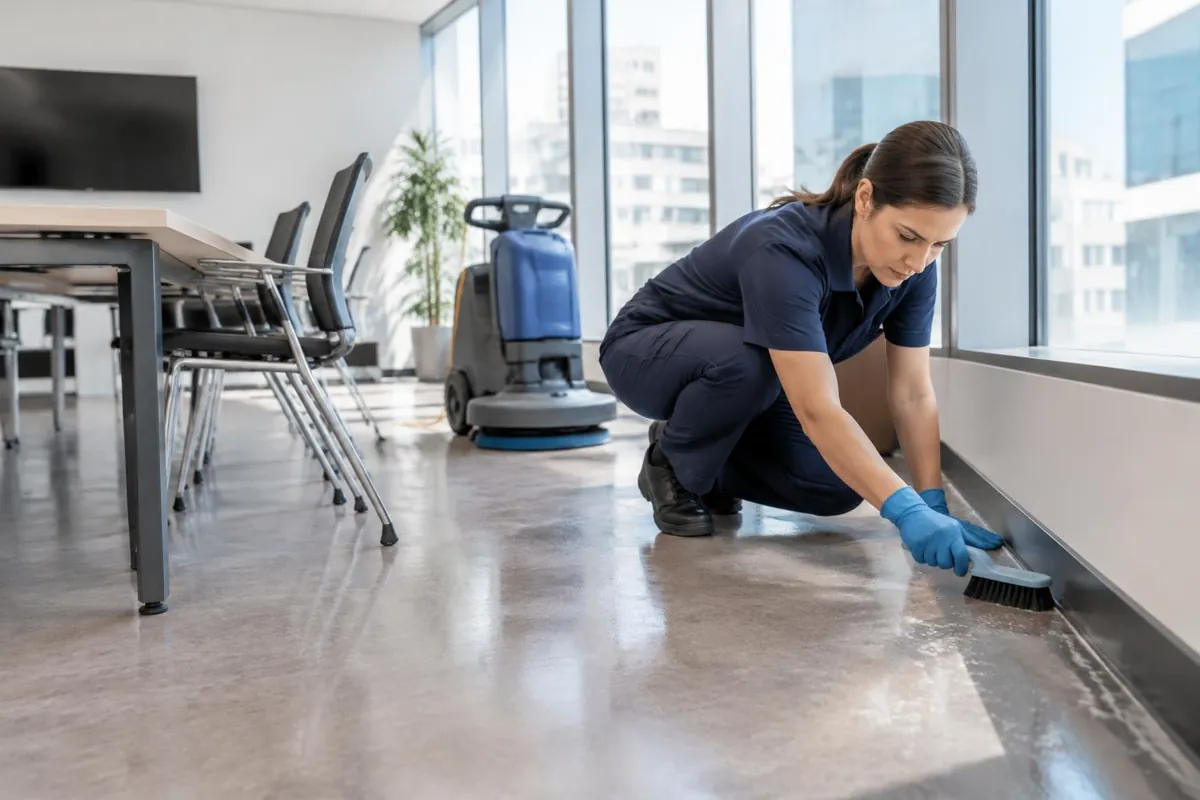
Our Commercial Deep Cleaning Service
- Purpose
- Specified intensive and periodic cleaning
- Premises
- Offices, kitchens, shops and operational buildings
- Timing
- One-off or periodic visits by agreement
- Methods
- Chosen for soil type and material compatibility
- Boundaries
- Repairs and specialist systems assessed separately
- Pricing
- Condition, scope, access and downtime considered
What do deep cleaning services in Bristol include?
A commercial deep clean covers agreed detail tasks beyond the normal maintenance schedule. Depending on the premises, that might mean removing built-up grease, cleaning accessible edges and ledges, or addressing washroom scale. The scope must identify rooms, surfaces and equipment explicitly; a deep clean does not mean every concealed or inaccessible part is included.
An office may need attention behind movable furniture, while a shop may prioritise fixture edges and heavily used entrances. Specialist floor restoration, extraction systems and high-level access should be assessed separately rather than casually bundled in.
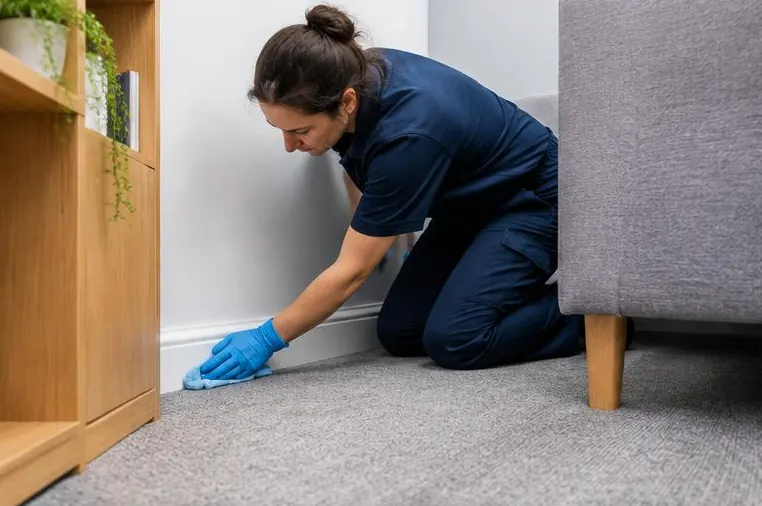
Typical tasks
- Detail accessible skirtings, ledges and floor edges
- Clean specified washroom fittings and scale deposits
- Degrease agreed kitchen surfaces where appropriate
- Address reachable touchpoints and neglected corners
Free site survey
Scope your commercial deep clean
Send photographs, surface details and your reopening deadline to discuss a focused deep-cleaning scope rather than an undefined whole-building promise.
- Written specification before any price
- Bristol and South Gloucestershire
When can a one-off deep clean take place?
Agree when the area must be ready for use, not just when cleaning can begin. A deadline should be based on the agreed methods and likely workload, not on an assumption that overnight work removes every constraint.
- Identify shutdown or quiet operating windows
- Allow drying and ventilation before reoccupation
- Agree who releases each completed work area
Before work
Clear and protect the agreed areas
Best forOperator arranges necessary isolation
Cleaning window
Complete the specified intensive tasks
Best forMaintain separation from building users
Return to use
Allow drying and review the checklist
Best forResponsible staff approve reopening
Compare in a table
| Window or zone | Focus | Planning point |
|---|---|---|
| Before work | Clear and protect the agreed areas | Operator arranges necessary isolation |
| Cleaning window | Complete the specified intensive tasks | Maintain separation from building users |
| Return to use | Allow drying and review the checklist | Responsible staff approve reopening |
How are build-up, sensitive finishes and equipment treated?
Cleaning methods should match both the type of soil and the underlying material. Grease, mineral scale and ingrained dirt require different approaches, while delicate coatings may limit the products or agitation that can be used. Deep cleaning should not be treated as permission to apply stronger chemicals indiscriminately or dismantle operational equipment without authorisation.
Surface care instructions and a small compatibility check can help avoid unnecessary damage. Persistent staining, corrosion or worn finishes may remain after cleaning and could require repair or restoration rather than further chemical treatment.
- Identify stone, coated metal and sensitive timber
- Separate removable soil from damaged finishes
- Agree equipment isolation and permitted access
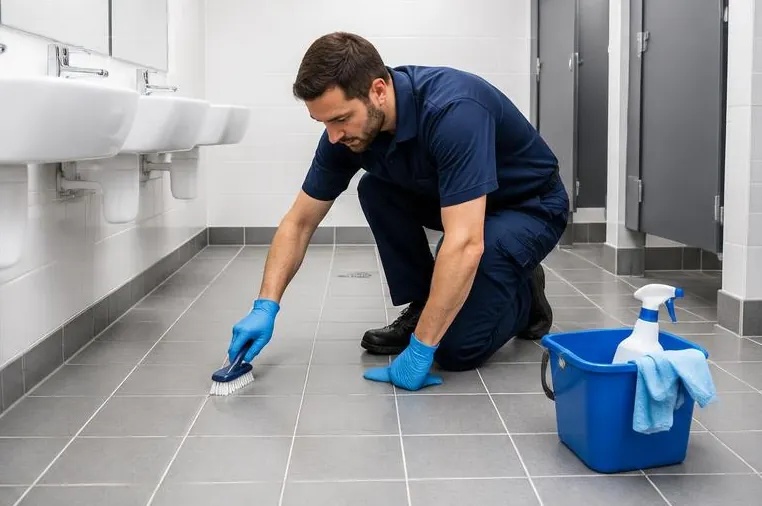
What preparation is needed for kitchens, offices and warehouses?
Preparation depends on the setting and the tasks selected. Offices may need clear desks and secured paperwork; kitchens need food protected and equipment access agreed; warehouses need safe traffic separation. Hazardous waste, significant mould or contamination should be flagged before attendance because these issues cannot be assumed within an ordinary commercial deep clean.
A useful pre-visit plan assigns responsibilities rather than leaving the cleaner to decide what to move. If specialist work is needed, establish the appropriate assessment and competence requirements before expanding the agreed scope or booking a completion deadline.
Clear or protect stock, documents and exposed food
Define which furniture may be moved safely
Identify restricted areas and suspected hazards
How are commercial deep cleaning prices worked out?
Deep cleaning prices reflect the amount and type of build-up, accessible floor area, room complexity and selected methods. A lightly used office and a grease-heavy kitchen cannot sensibly share one universal rate. Photographs can support an initial discussion, but difficult access or uncertain condition may require a site assessment before a meaningful quotation is prepared.
Your quotation
A fixed price after a free survey
- Condition, soil type and previous maintenance
- Method, equipment and access requirements
- Working window and preparation responsibilities
How do we arrange commercial deep cleaning?
Planning a deep clean starts with the problem areas and the deadline for bringing them back into use. We assess condition and access, select suitable methods and define the tasks to be priced. Preparation and isolation responsibilities are agreed before attendance, followed by a review of completed work against the original scope.
- 1
Identify accumulated soil
Show the areas routine cleaning is not resolving.
- 2
Check materials and access
Flag sensitive finishes and equipment restrictions.
- 3
Choose the intensive scope
Separate cleaning from restoration and specialist systems.
- 4
Prepare the work zone
Arrange clearance, protection and any required shutdown.
- 5
Review the finished tasks
Check the agreed scope before normal use resumes.
Commercial Deep Cleaning questions
Straight answers to the questions we hear most often. If yours is not here, ask us during your free survey.
How is a deep clean different from regular cleaning?
Regular cleaning maintains the agreed baseline through repeated tasks such as vacuuming, wiping and washroom care. Regular maintenance is still needed afterwards, and neglected surfaces may require more than a single intensive session.
Can a deep clean be completed while the building remains open?
Some work can be phased around occupied areas if safe separation, noise control and access can be maintained. Other tasks need rooms closed or equipment stopped. Cleaning signs alone do not make a busy route suitable for wet work or unrestricted machine use.
Does kitchen deep cleaning include extraction ducts?
Kitchen surfaces and accessible equipment can be scoped separately from extraction canopy, filter and ductwork cleaning. Food protection, equipment isolation and reopening checks also need clear responsibilities with the operator.
Will deep cleaning remove every stain or unpleasant odour?
Not every mark or odour is removable through cleaning. Agree realistic objectives before work begins and avoid treating stronger chemicals or repeated wetting as an automatic solution to persistent problems.
How often should a business arrange a deep clean?
Frequency should follow use, observed build-up and the tasks already included in routine cleaning. Where accumulation returns quickly, changing everyday maintenance may be more useful than repeatedly booking intensive work.
Can you quote from photographs and a floor plan?
Photographs and a floor plan can help define the initial scope, particularly when they show edges, fixtures and the worst affected areas. They may not reveal concealed build-up or damaged finishes, so a visit can still be necessary before agreeing methods, resources and a reliable description of the work.
Related services
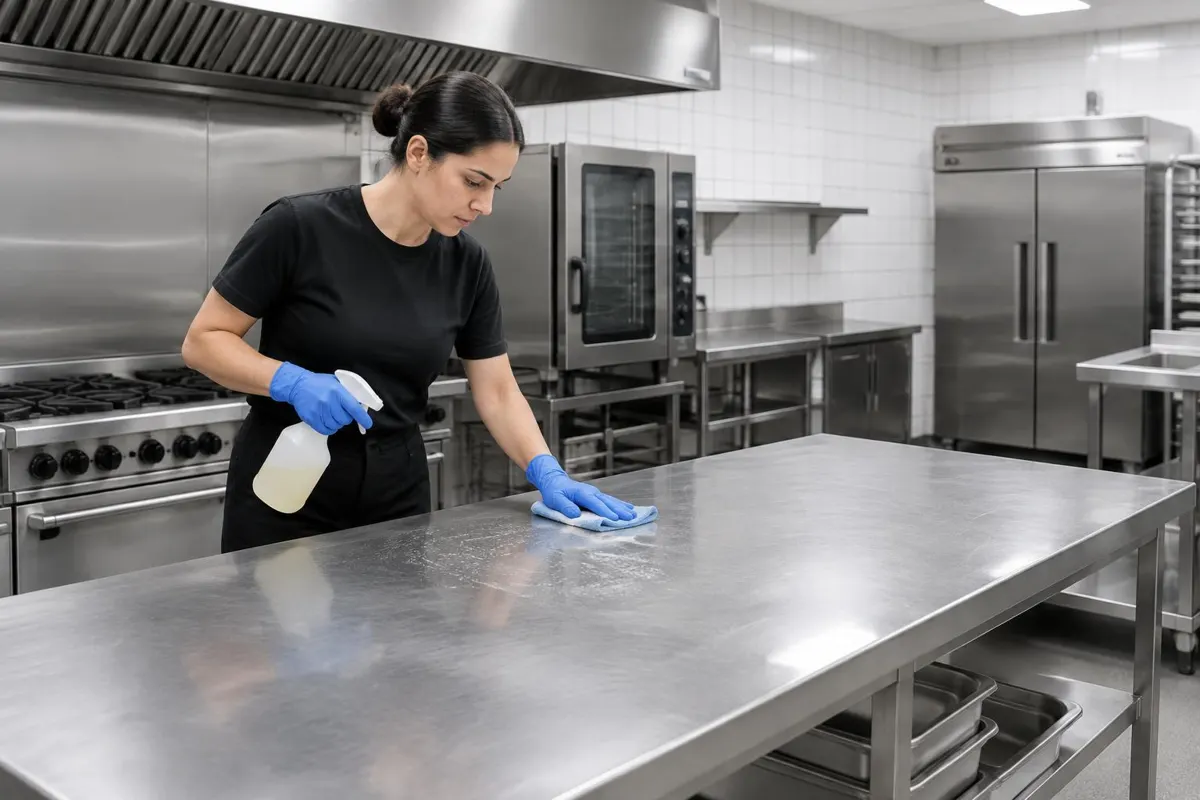
Show us the areas routine cleaning cannot resolve
Send photographs, surface details and your reopening deadline to discuss a focused deep-cleaning scope rather than an undefined whole-building promise.